Issue: Vol. V, No. 1, May-July, 2026
The year 2026 is significant for Assamese poetry for two primary reasons. One of these is the 75th anniversary of the first major collection of modern Assamese poetry, He Aranya He Mahanagar (Navakanta Barua, 1951). This was discussed in the editorial note of the previous issue of PWF. Additionally, on March 28, 2026, PWF and Kabita Adhyayan Got jointly organized an online lecture to commemorate this 75th anniversary. Renowned critic Munin Bayan delivered a thoughtful lecture titled ‘Modernist Navakanta: He Aranya He Mahanagar‘.
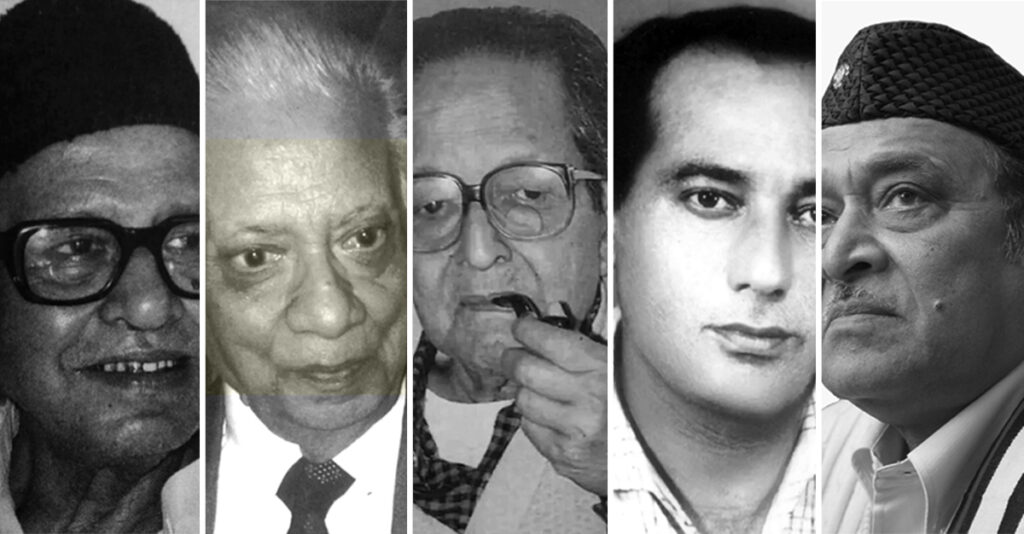
The second reason why 2026 holds special significance for Assamese poetry is that this year marks the birth centenary of five distinguished Assamese poets. They are Navakanta Barua (1926–2002), Ajit Barua (1926–2015), Bhupen Hazarika (1926–2011), Keshab Mahanta (1926–2006), and Rudra Baruah (1926–1980). Each of these poets has made invaluable contributions to shaping the form and direction of modern Assamese poetry. Navakanta Barua and Ajit Barua successfully introduced the Anglo-American modernist trend into Assamese poetry. The poetry of Bhupen Hazarika and Keshab Mahanta was rooted in a socialist, people-oriented consciousness. In Rudra Baruah’s lyric poems, the colors and forms of rural Assamese life and nature became symbols of modern sensibility. We remember all these poets with deep respect on their birth centenary.
PWF was founded on April 30, 2022, and the magazine has now completed four years. It has been publishing Assamese poetry alongside its English translations, Assamese translations of foreign poetry, and original English poems. Parallel to poetry, emphasis has also been placed on publishing critical and thought-provoking essays on poetry. The demand for online magazines is steadily increasing. Today’s Millennials and Gen Z readers prefer to access everything online. It is hoped that in the coming days, PWF will be able to fulfill the evolving demands of its readers.