Issue: Vol. V, No. 3, November-January, 2026-27
1)
The joy of reading poetry is enhanced by the interpretations and analyses offered by critics. During the recitation of the Kirtan and the Bhagavata in a Namghar, the reader sometimes pauses to explain the passages in everyday spoken language. At other times, an experienced person sitting nearby offers the explanation. Such interpretations make the experience of listening to the Kirtan and the Bhagavata more engaging for common listeners. In rural society, those who can explain these sacred texts effectively are held in high regard.
The same holds true for modern poetry. Critics’ interpretations and analyses help make the experience of reading poetry richer and more multidimensional for general readers. A reader can also assume the role of a critic. All that is needed is a critical frame of mind.
Different interpretations and analyses not only enrich readers’ understanding of a poem but also help extend its life. Poetry does not live on the pages of closed books or on bookshelves. It lives through the diverse interpretations and analyses it receives at different times. Poets themselves can occasionally take on the responsibility of explaining and analysing poetry in simple, accessible prose. They can begin with their own poems.
A poem is not a riddle whose appeal disappears once its meaning has been explained. Of course, some poems may lend themselves to a single interpretation. But most accomplished poems are open to multiple readings and invite diverse interpretations. To make the joy of reading poetry even more rewarding, we must give due importance to interpretation and analysis alongside the act of reading.
2)
September 2026 was a month of sorrow for Assamese poetry. On 20 September, we lost Anis-Uz Zaman (3 February 1947–20 September 2026), a distinguished modern Assamese poet and translator.
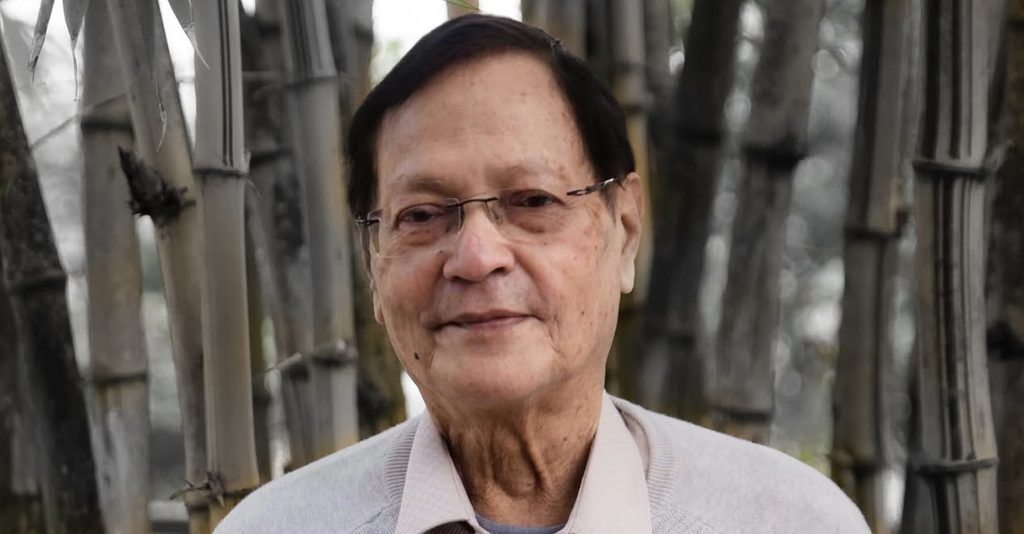
Making his literary debut with the poetry collection Agyate in 1989, Zaman was one of the leading poets of the generation that established itself in the period following the Ramdhenu era of Assamese literature. His poetry was not marked by the charge of obscurity. His inspiration came from the folk life, language and natural landscape of Assam.
Towards the later part of his poetic career, he drew closer to the Japanese poetic tradition and also translated Japanese poetry into Assamese. The influence of Japanese poetry is particularly noteworthy in the poems collected in his book Naikhon Koloi Goise Tumio Nejana Moyu Nejano (Neither You nor I know where the river is flowing), published in 2021.
Anis-Uz Zaman was a well-wisher of PWF. He also translated haiku for PWF.
We express our profound grief at the passing of the poet.