(In revered memory of Dr Kabin Phukan Sir)
Issue: Vol. V, No. 3, November-January, 2026-27
Krishna Dulal Barua
“Our slogan therefore may indeed be this: Translate or Perish!”
The entire hall experienced a momentary jolt with the concluding line of the first part of Dr Kabin Phukan’s speech at the two-day Translation Workshop organised by the Department of English, Dibrugarh University on 22nd July, 2006. The invited guests, resource persons and participants were listening with rapt attention to the inaugural speech delivered by our revered teacher and mentor as he tried to stress upon the fact that our very existence, in a sense, has made it compulsory for us to go on TRANSLATING. He had earlier said, “Alarm bells for animals ring out in this way in the face of impending danger and all animals translate these sounds to their body-language… The thunder in the sky is really a spoken message from nature that we instantly translate.”
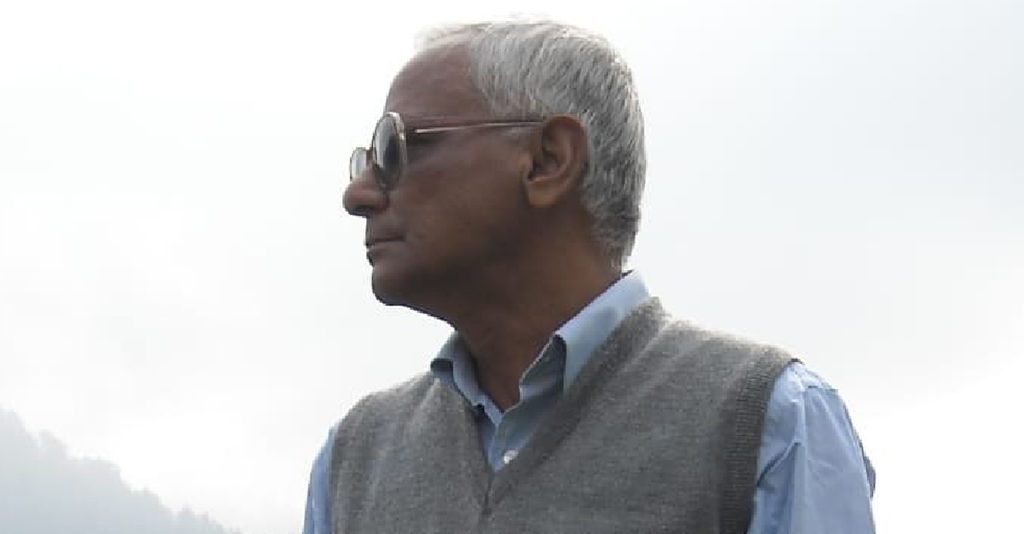
Dr Kabin Phukan (b.1946-d.2011), the distinguished Assamese poet, literary critic, translator and former Head of the Department of English, Dibrugarh University had such an extraordinary personality that his enlightening words, oral or written, always ignited our minds and took us to a new world altogether. He had his own way of interpreting things and, that too, in the simplest form of expression possible. “…you translate and you exist, you do not translate and you do not exist … To exist, I would say, is to have relationships, relationships which are ever-changing and endless, till death, in some sense, ends mortal existence. To most of us, however, it is also an agreeable idea that the living have a meaningful relationship with the dead too, with the memories, the images and the ideas of them…”
When after our admission at Dibrugarh University in 1984 the classes started, Phukan Sir was away at Yale University for his post-doctoral research on Ezra Pound as a Fullbright scholar. Earlier, after post-graduating from Gauhati University in English literature, he had achieved his Ph.D from the University of Leeds, UK for his brilliant doctorate thesis on T.S. Eliot. Till Phukan Sir returned to our Department, Dr Amaresh Dutta, the noted Shakespearean scholar, was the Head of our English Department. Dutta Sir’s celebrated work, Shakespeare’s Tragic Vision and Art, published in 1963, had been one of our reference books in the honours class and it was quite an exciting experience to have a revered writer from our course of studies as our teacher. Soon we came to know that he had been the Chief Editor of the Encyclopedia of Indian Literature published by the Sahitya Akademi and his other publications include Poetry, Religion, Culture and Sankardev. His collection of poems Captive Moments (1971) was honoured by the International Association of Poetry in Rome. We were equally filled with pride to learn that, during that period, our Vice Chancellor, Dr Sailadhar Gogoi was the President of the Association of Indian Universities.
Within a few weeks Dr Kabin Phukan Sir arrived to take charge as Professor and Head of our Department. He was young and energetic, clean shaven at all moments and immaculately dressed, serious and inspiringly enthusiastic. During his lectures, besides a few points that we jotted down, almost everything left their indelible imprint even on a fickle mind as mine.
Dr Kabin Phukan’s literary publications in book form may have surfaced rather late in life, but each of them hit the stands with a lot of spark. His first collection of poems Enekoiye Din Enekoiye Rati (This is how days and nights pass by) was published in 1991 and initiated a new trend in Assamese poetry. The eminent poet and critic, Dr Mahendra Bora praised the collection for having brought about a transformation in the nature and form of modern Assamese poetry. This was followed a year after by Kone Koi Nupuwai Aosir Rati (Who says the night of the new moon doesn’t dawn), Tok Dekhi Na-jone (On seeing you the new moon) in 1993 and Ei Anuragi Ei Udas (Passionate one moment, listless the next) in 2009.
Interspersed with delicate imagery, love, nature and the deeper perception of life are the dominant subjects of his poetry. His conscious experimentation with the poetic language set him apart from other contemporary poets and those preceding them. By using them in rich connotative forms and nuanced expressions, he brought into his poetic diction the lesser-used words and unusual phrasings of the Assamese language. His experimentations with sarcasm and irony, along with the deft use of the nuanced and moraic rhythm of the Assamese language, have added a new flavour to modern Assamese poetry. Here is a humble English rendition of one of his popular poems— ‘Bayas’ (Age):
Age
Hiptage bloom!
Perhaps you haven’t been able
To recognise me at all
I too am unable to keep count
Of the number of ages that have passed by
Since I’d gone missing
Since I’d returned to my native land
Rowing downstream.
Ask the westerlies
That comes in howling from the west.
Arrange the nuptials
Of the unmarried night jasmine
While the age is still there
By any means
As early as possible
With a leafless pumpkin head.
Ask the westerlies
About a leafless pumpkin head
Whoever wherever there be one.
Alongside his poetic pursuits, Dr Phukan was equally active in literary criticism and translations as well. Being well-versed in varied literary and poetic theories of both oriental and western literature, his distinctive voice instantly established him as an eminent literary critic. His two seminal volumes of literary criticism— Asomiya Kabitar Prabah (The stream of Assamese poetry) and Kabitar Juti Bichar (In quest of the flavour of poetry) appeared in 1995 and 1996 respectively. His Assamese translations of selected acts and scenes from a couple of Shakespearean tragedies were published in the esteemed Assamese literary journal Gariyoshi and were hailed as remarkable enterprises in the literary circles. The erudite scholar edited some of the most significant literary journals of this region that include Anubad which focused on translation, the Dibrugarh University Journal of English Studies and the Colloquy (published under the SAP-DRS Project, Department of English, Dibrugarh University).
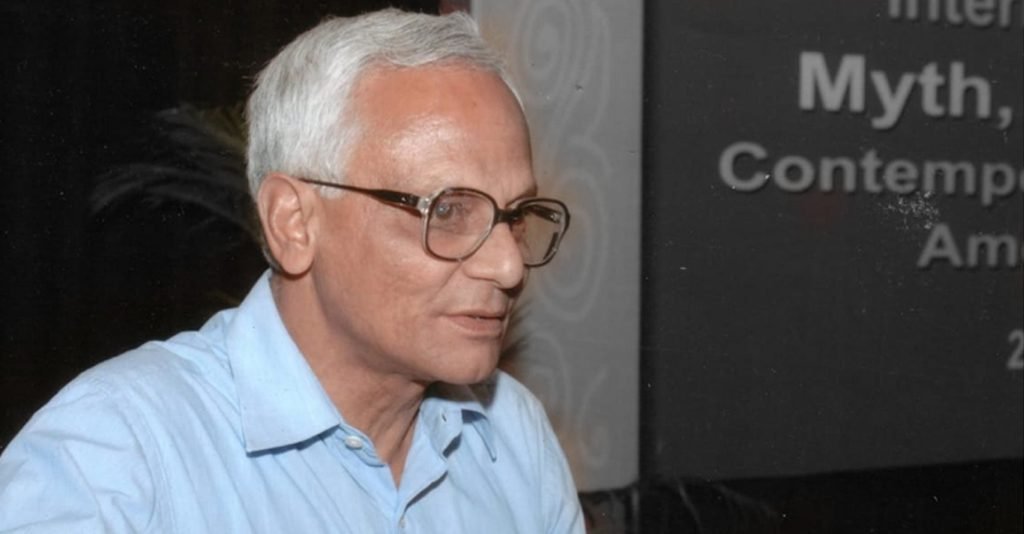
For his invaluable contributions to literature, Dr Kabin Phukan was honoured with the Krantikal Sahitya Sanman in 2012 by the Krantikal Publishers, Nagaon. Being a resident of Nagaon and a former student of Phukan Sir, I had the great fortune of receiving him at the Chaparmukh Railway station. Sir, accompanied by Ruma Madam, was physically unwell and, therefore, had opted to travel with a little more comfort by train. This was my third golden opportunity of meeting Sir after I had left the university. In 1999 we had Phukan Sir as one of our advisers in a week-long translation workshop organised by the Sahitya Akademi at Guwahati from 15th to 21st January. It was one of the most memorable experiences of my life from when on I could remain in constant touch with him through correspondence. Again in 2006, I met him at Dibrugarh University for a couple of days after being invited to a translation workshop organised by our Department on 22nd and 23rd July. On both the occasions I could deeply perceive his fatherly affection for a former student. In this workshop he demonstrated ingenious tactics of overcoming the challenges in translating legal or professional documents. He cited the example of the disasters of Hiroshima and Nagasaki which perhaps would not have taken place had a Japanese telegram to the United States of America not been mistranslated! In the workshop he expressed the vital necessity on our part in contributing towards the promotion of Nagamese language and literature. Incidentally, Dr Tali Temsu Ao of the State Library, Kohima, Nagaland was also present in the workshop as one of the Resource Persons.
In his opening speech, Phukan Sir also said, “Existence and relationships make translation, in its largest sense, a continuous preoccupation at the level of consciousness and, perhaps, beneath it too. It is not impossible that our illusions, our happy dreams and our nightmares are nothing but mistranslations of reality and our relationships with them, just as our superstitions, are perhaps no more than our anxieties about the continuance of existence. Whatever they are, they too constitute relationships in my sense of the word.”
During his two-day stay at Nagaon, he spent most of the time on his bed. We prepared his food, as prescribed by his physician, with immense care at home and restricted the entry of excessive visitors and journalists at any time of the day. He felt more comfortable to spend his time with us in the evening. In the midst of a conversation, he suggested that the writing of articles on serious subjects should be completed before one attains the age of sixty— the strenuous exertion even after fifty really tells upon the health.
A few months after being honoured with the Krantikal Sahitya Sanman, Dr Kabin Phukan Sir breathed his last following renal failure. The billowing of the waves of a heart-rending emptiness has never subsided within us. Incidentally, that very year, he was posthumously honoured with the much-deserved Sahitya Akademi Award for his collection of poems, Ei Anuragi Ei Udas.