Mridul Bordoloi
Issue: Vol. V, No. 2, August-October, 2026
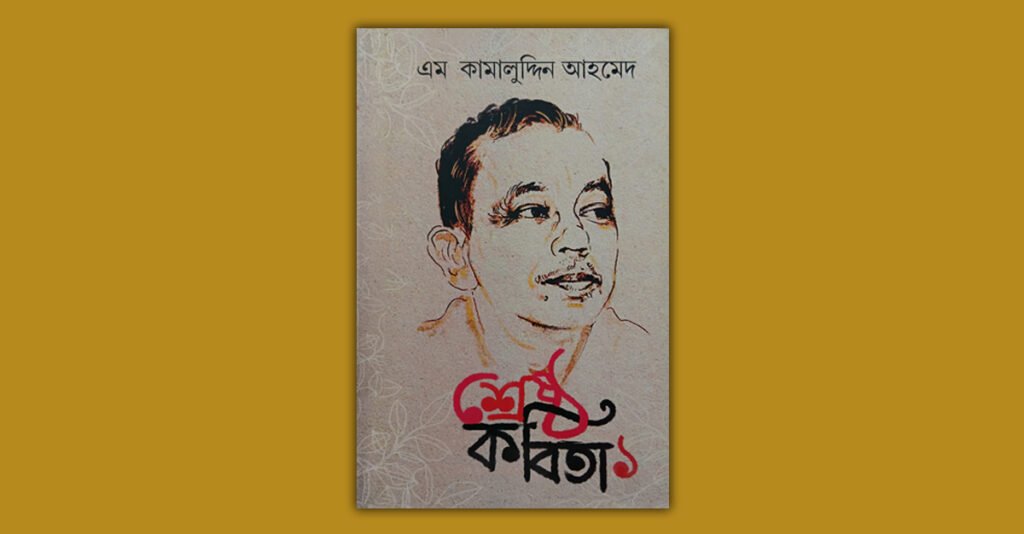
There are poets who merely describe the world, and there are poets who create an alternative ontology through language. M. Kamaluddin Ahmed belongs to the latter category. His Sreshtha Kabita, Vol. I (শ্ৰেষ্ঠ কবিতা ১), is an intricate phenomenology of consciousness where memory, space, history, language, existential predicament and everyday life are continually transformed into symbolic experience. Every poem in this remarkable collection is an attempt to recover a hidden grammar of being, where the visible world becomes only the threshold of deeper metaphysical realities.
Known widely as an eminent academic and an influential public intellectual, Dr. Ahmed’s scholarship informs his poetry without ever making it academic. Instead, his intellectual discipline manifests itself as remarkable precision of image, philosophical restraint, language felicity, and symbolic density. The poems of this collection demonstrate that the poet has absorbed literary traditions without becoming imprisoned by them. They inhabit simultaneously the worlds of Assamese cultural memory, modernist experimentation, and post-symbolist abstraction.
Perhaps the most immediately striking aspect of this collection is Ahmed’s extraordinary symbolic constellation. Certain recurring images— birds, flowers, trees, stones, water, smoke, ponds, wind, stars, caves, and shadows—form an interconnected symbolic ecology. These images are, however, not characterised by essentialist, reductionist cultural notions. Instead, they are dynamic, fluid, continually shifting in their semantic implications, depending upon their relational contexts. The “bird,” arguably the central metaphor of the collection, appears variously in different poems as freedom, memory, imagination, exile, death, transcendence, artistic possibility, and the imprisoned self. Such symbolic mobility and irreducibility provide the poems immense richness and density.
The opening poem, “গছ” (Tree), establishes this poetic philosophy with remarkable elan. The speaker’s repeated admission: “মই নাজানো” (I do not know) is perhaps a kind of epistemological humility. The mysteries of roots, ripened fruits, returning birds, broken branches, and regenerated life become questions beyond scientific explanation. The poem seems to reject the modern desire to master nature through knowledge and instead celebrates wonder as the highest form of understanding. The image of broken branches giving birth to new life subtly transforms destruction into renewal, suggesting that existence itself is governed by cyclical regeneration rather than linear degeneration. Rather than presenting nature as an external landscape awaiting human contemplation, the poem imagines it as a living assemblage of mutually constitutive relationships. Such a vision resonates equally with indigenous ecological worldviews wherein perception itself is always dialogic.
Equally remarkable is “আখৰ” (The Written Word), one of the finest meditations on language in recent Assamese poetry. Here letters signify more than mere encoded systems. They become something bigger – receptacle for storing civilisational memory and ancestral trauma. The earthen pot holding fragments of sky becomes an unforgettable image of finite humanity containing infinite aspiration. Ahmed imagines writing as an act of historical continuity whereby countless generations manifest their dreams into language. Writing is presented as an ethical responsibility carried across generations. This wonderfully resonates with Octavio Paz’s statement – “Language is the house of presence.”
Several poems explore mortality with unusual philosophical stoicism. “চৰাইবোৰৰ ডেউকাত”(On the Wings of Birds), “পৰিত্যক্ত উদ্যানত এজন তৰুণ আৰু বৃদ্ধসকল” (A Young Man and the Old Men in an Abandoned Garden), “স্থিৰচিত্ৰ” (Still Image), “কাঠৰ পুতলা” (Wooden Doll), and “জলপ্ৰপাত” (Waterfall) dissolve conventional distinctions between life and death. In “চৰাইবোৰৰ ডেউকাত” (On the Wings of Birds), the speaker awakens upon a half-burnt funeral pyre, transforming death into another beginning rather than an ending. The smoke of the crematorium clinging to birds’ wings becomes one of the collection’s most haunting images, suggesting that mortality accompanies all flights of life. Likewise, “কাঠৰপুতলা”(Wooden Doll) reveals how grief frequently suspends emotional expression until the dead become more animate than the living themselves. These poems resist sentimentality. Their emotional force derives precisely from their restraint.
Among the collection’s most powerful achievements is its sustained interrogation of poetry itself. “এটা কবিতাৰ কাৰণে” (For the Sake of a Poem) may be read as an artistic manifesto. The speaker declares his willingness to sacrifice dignity, endure humiliation, dissolve his identity, or become sunlight in the palm of the world’s poorest person – all for the sake of one poem. Such declarations do not sound rhetorical because the poem grounds artistic creation in ethical transformation. Poetry becomes an existential discipline demanding complete absorption. The final image of becoming the sun in the hand of the destitute elevates poetic vocation into an act of human solidarity.
Another major concern running throughout the volume is “displacement” – psychological, historical, ecological, and identitarian. “বতাহ” (Wind) captures this condition with remarkable economy. The wind carries not only childhood but exile, violence, homelessness, and historical trauma. Identity becomes unstable; the human subject repeatedly loses its address. The poem expands from intimate lyricism into a meditation on refugeehood and collective displacement without becoming overtly political. Ahmed’s poetry possesses the rare ability to allow history to enter poesy through image rather than ideological assertion. The nuanced treatment of sensitive subjects (by eschewing graphic visceral imaginary) eloquently testifies to the poet’s deep philosophical perception over both matter and spirit.
Urban modernity receives similarly nuanced treatment in “পাণবজাৰ এটা ধেকুৰা কুকুৰৰ দৰে” (Panbazar Like a Stray Dog), “গাড়ীখন” (The Vehicle), “ক্রীড়াভূমি” (The Playing Field), and “চাইকেল” (The Bicycle). Panbazar, the cultural heart of Guwahati, becomes an almost sentient entity– an intimate place – carrying memories of books, intellectual life, and vanished literary traditions. The bicycle descending from cosmic space transforms an ordinary object into an emblem of everyday transcendence. Ahmed’s poems repeatedly demonstrate that modern urban existence is saturated with unnoticed metaphysical possibilities.
The collection is equally attentive to ecological consciousness. Poems like “অসম বানপানী: ১৯৯৮” (Assam Flood: 1998), “গছ” (Tree), “মাটি আৰু আকাশ” (Soil and Sky), “পানীৰ মাজেৰে” (Through Water), and “পুখুৰী আৰু চুমা” (The Pond and the Kiss) refuse simplistic environmental romanticism. Nature appears neither idyllic nor hostile but profoundly relational. Floodwaters become simultaneously destructive and mythic. Water preserves memory, yet also threatens annihilation. Trees speak, flowers remember, ponds desire, and stones accumulate emotional history. This ecological imagination resonates with indigenous worldviews where human and non-human lives participate in a shared ethical universe.
One of Ahmed’s most fascinating poetic techniques is his persistent defamiliarisation of ordinary reality. Familiar objects are continually estranged through unexpected juxtapositions. A pond becomes erotic philosophy in “পুখুৰী আৰু কামসূত্র” (The Pond and the Kamasutra); balloons become repositories of melancholy in “বিষাদ” (Sadness); caves become interior psychology in “গুহা” (Cave), and flowers become historical witnesses in “গোঁসাইগাঁৱৰ চিঞৰটো”(The Scream from Gosaigaon). Such transformations recall aspects of modernist philosophy while remaining unmistakably rooted in Assamese linguistic and cultural sensibilities.
Memory functions throughout the volume as active reconstruction, not unlike Marcel Proust’s IAMs (Involuntary Autobiographical Memories) triggered by mostly quotidian (and occasionally, by extraordinary) events. Several poems dedicated to individuals–“প্ৰাত্যহিক তৰা” (Daily Star), dedicated to Dr. Hiren Gohain; “বিস্তৃতি” (Expansion), in memory of Nibharsha Ram Deka; “শ্রীনিবাৰণ ভট্টাচার্য” (Srinibaran Bhattacharya), etc., –move beyond commemorative verse. These poems recover personalities through symbolic landscapes. Individuals become embodiment of ethical values whose influence radiates beyond personal memory into collective consciousness.
The language of the poems in the collection deserves particular attention. Ahmed writes in a diction that is simultaneously sophisticated, yet accessible. Surface accessibility conceals remarkable symbolic density. Syntax frequently remains fragmentary, allowing silence to become part of poetic meaning. Repetition, especially of certain key images, creates musical patterns resembling incantation. His poems often refuse closure, ending instead with open symbolic spaces that continue to resonate long after reading.
Stylistically, Ahmed occupies an interesting position within modern Assamese poetry. One encounters echoes of Symbolism, Modernism, phenomenological introspection, and even certain postmodern discontinuities. Yet these influences are never derivative. The poems remain unmistakably Assamese in rhythm, imagery, ecological consciousness, and emotional texture. Locality does not become parochialism in the poems; rather, the regional becomes the portal towards the presentation of universal human concerns.
The volume also demonstrates remarkable emotional control. Even when confronting death, violence, floods, loneliness, ageing, or historical wounds, the poemsdisavow melodrama. Instead, they operate through suggestiveness. Meaning emerges gradually from symbolic accumulation. This trust in the intelligence of the reader constitutes one of the major strengths of the collection.
If one were to identify the recurring philosophical insight that binds these poems together, it would perhaps be the conviction that reality always exceeds perception. Birds carry more than wings; flowers contain memory; stones preserve feeling; trees embody unknowable wisdom; water remembers what history forgets; language shelters generations; and poetry itself becomes the highest mode of attentive existence. The poems repeatedly ask the reader to go beyond the limits of an observer (flaneur) to inhabit the world of multiple interspecies entanglements.The implication is that meaning emerges neither from the isolated subject nor from the autonomous text but from their continual interaction. Karen Barad’s notion of “agential realism” seems particularly useful in this context.
M. Kamaluddin Ahmed’s Sreshtha Kabita, Vol. I, therefore, stands as one of the significant achievements of contemporary Assamese poetry. It exemplifies how rigorous intellectual engagement can coexist with lyrical sensitivity, and how regional imagination may articulate profoundly universal questions concerning existence, language, memory, and human and non-human precarity. Ahmed has produced a collection that rewards repeated reading because its symbols continually generate new meanings. These poems are, hence, not easy reads, or cloying objects of consumption. They do not surrender themselves immediately. On the contrary, they are, what Roland Barthes termed, “writerly” texts – inviting contemplation, participation, and interpretative autonomy.
Ultimately, this collection reminds us that genuine poetry enlarges consciousness. M. Kamaluddin Ahmed’s poems encourage readers to look again at birds, trees, ponds, flowers, stones, smoke, and sky as non-human ecologies powerfully entangled with humanity’s ceaseless search for meaning. In an age increasingly dominated by informational/digital singularity, Sreshtha Kabita, Vol. I, quietly reaffirms poetry’s timeless vocation: to restore wonder to perception and to reveal the hidden, uncanny conversations between the self, language, nature, and time.
Dr. Mridul Bordoloi teaches in the Department of English, Dibrugarh University. As a literary critic, he writes in English and Assamese as well.